The Lowest Point on Earth
It depends on whether you count the ocean. If you do, the lowest point on Earth is the bottom of the Mariana Trench; if you mean the lowest ground you could actually stand on, it’s the shore of the Dead Sea.
Both are worth knowing, and they answer different versions of the question. Here is each — with sourced figures — plus a comparison that turns the whole thing on its head: the ocean’s deepest point is farther below the sea than Everest stands above it.
The lowest point on Earth: Challenger Deep
The single lowest point on the planet’s solid surface lies at the bottom of the sea. Challenger Deep, a slot at the southern end of the Mariana Trench in the western Pacific, reaches about −35,876 ft (−10,935 m) below sea level — deep enough that the water above presses down at more than a thousand times the pressure at the surface, in permanent, freezing darkness.
It sits where one tectonic plate dives beneath another — a subduction zone — pulling the seabed down into a trench. The depth has been refined over time, much like Everest’s height: early soundings gave figures near −36,070 ft (−10,994 m), and the most recent survey, in 2021, puts it at −35,876 ft (−10,935 m), give or take a few metres. The exact number keeps tightening as the instruments improve.
It is named for HMS Challenger, whose crew first sounded the depth in 1875, and it was first reached by people in 1960, when Jacques Piccard and Don Walsh rode the bathyscaphe Trieste to the bottom. Only a handful have been since — far fewer than have stood on Everest.
The lowest point on dry land: the Dead Sea
If you mean the lowest place you could walk to, the answer is the shore of the Dead Sea, at about −1,443 ft (−440 m) below sea level (2025) — the lowest exposed land on Earth. Its water is so salty that swimmers float, and it sits in the Jordan Rift Valley, where the crust is slowly pulling apart.
The figure is a moving target, because the lake is shrinking. More water evaporates and is drawn off upstream than the Jordan River brings in, so its surface drops about 1.1 m a year and the shoreline recedes with it — most years it sets a fresh record for the lowest dry land on Earth. The shore stood near 430 m below sea level in the mid-2010s; it has since fallen past 440 m, and the older figure is the one still baked into most datasets — ours included. The Dead Sea is bordered by Jordan, Israel and the West Bank; this page describes the terrain only and takes no position on the boundaries around it.
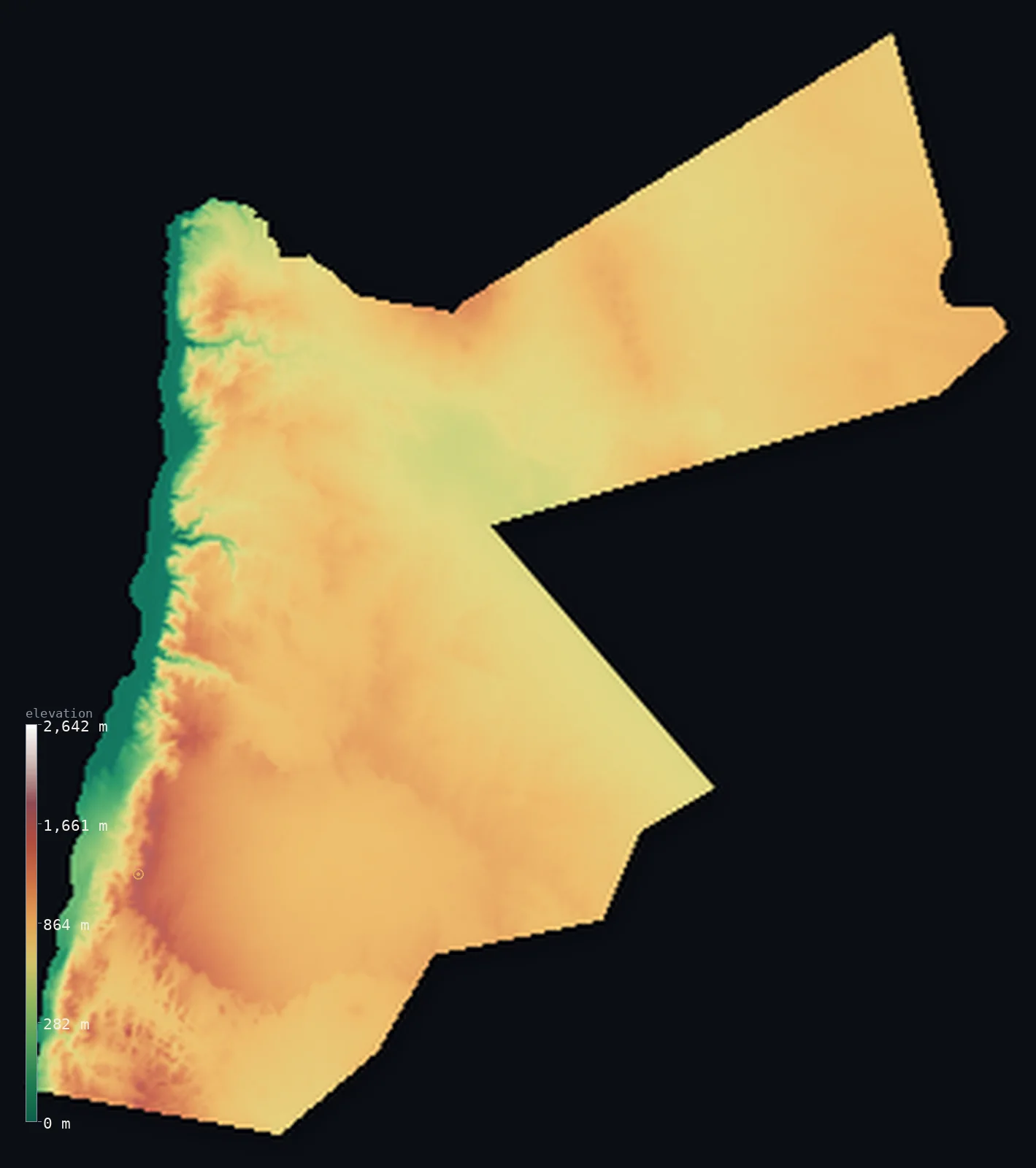
Deeper than Everest is tall
Here is the fact that reframes it. Challenger Deep is farther below sea level than Mount Everest — the highest point on Earth at 29,032 ft (8,849 m) — stands above it. Drop Everest into the Mariana Trench, base on the sea floor, and its summit would still sit roughly 6,844 ft (2,086 m) underwater.
The two extremes are almost mirror images — the highest place you can stand and the lowest point there is — separated by nearly 20 km of vertical range across the Earth’s surface. One rises from a continental collision; the other is torn open where the sea floor plunges into the mantle.
Other deep depressions on land
The Dead Sea is the deepest, but several other places sit well below sea level on dry land — mostly desert basins with no outlet to the ocean, where evaporation has drawn the surface down. Each is the lowest point of its country, and all are in our elevation data.
After the Dead Sea come Djibouti’s Lake Assal (−509 ft (−155 m) below sea level) and China’s Ayding Lake in the Turpan Depression (−505 ft (−154 m)), then the Qattara Depression in Egypt (−436 ft (−133 m)) and the Karagiye Depression in Kazakhstan (−433 ft (−132 m)). Death Valley gives the United States its floor at −282 ft (−86 m). See the full country ranking in countries below sea level.
Why are these places so low?
Two forces make ground go below sea level, and each of the record-holders is one of them. The Mariana Trench is subduction — one plate sliding under another drags the sea floor down into a deep, narrow gash. It’s the same process that builds the volcanoes and earthquakes of the Pacific “Ring of Fire.”
On land, the lows come from rifting and evaporation. The Dead Sea sits in a rift where the crust is stretching and dropping; the desert basins — Qattara, Karagiye, the Turpan Depression — are hollows with no drainage to the sea, where the sun removes water faster than rivers deliver it, and the surface draws down below sea level. It’s the mirror image of what pushed the highest mountains up, and it’s measured the same way: height, or depth, relative to the sea (see elevation vs altitude).
Lowest point on Earth: Challenger Deep, −35,876 ft (−10,935 m) below sea level (2021 survey, per NOAA and Britannica).
It’s deeper than Everest is tall — sink the mountain to the trench floor and 6,844 ft (2,086 m) of ocean would still cover the summit.
See the depressions in 3D
Numbers on a page are one thing; watching the ground drop below the sea is another. We rendered the five deepest land basins as tight 3D terrain straight from the Copernicus GLO-30 model — each one dips below the sea-level plane, and you can drag to spin it. The marker sits at the low point, labelled with its surveyed depth. (The ocean floor isn’t here — the model maps land, not the seabed.)
A note on what the model can and can’t see. GLO-30 measures the land surface, so a dry basin floor reads true to within a few metres — but a lake’s water surface is a gap in the data, so for the Dead Sea the model reads the exposed shore near 430 m rather than the receding brine now past 440 m. Each caption headlines the surveyed figure.
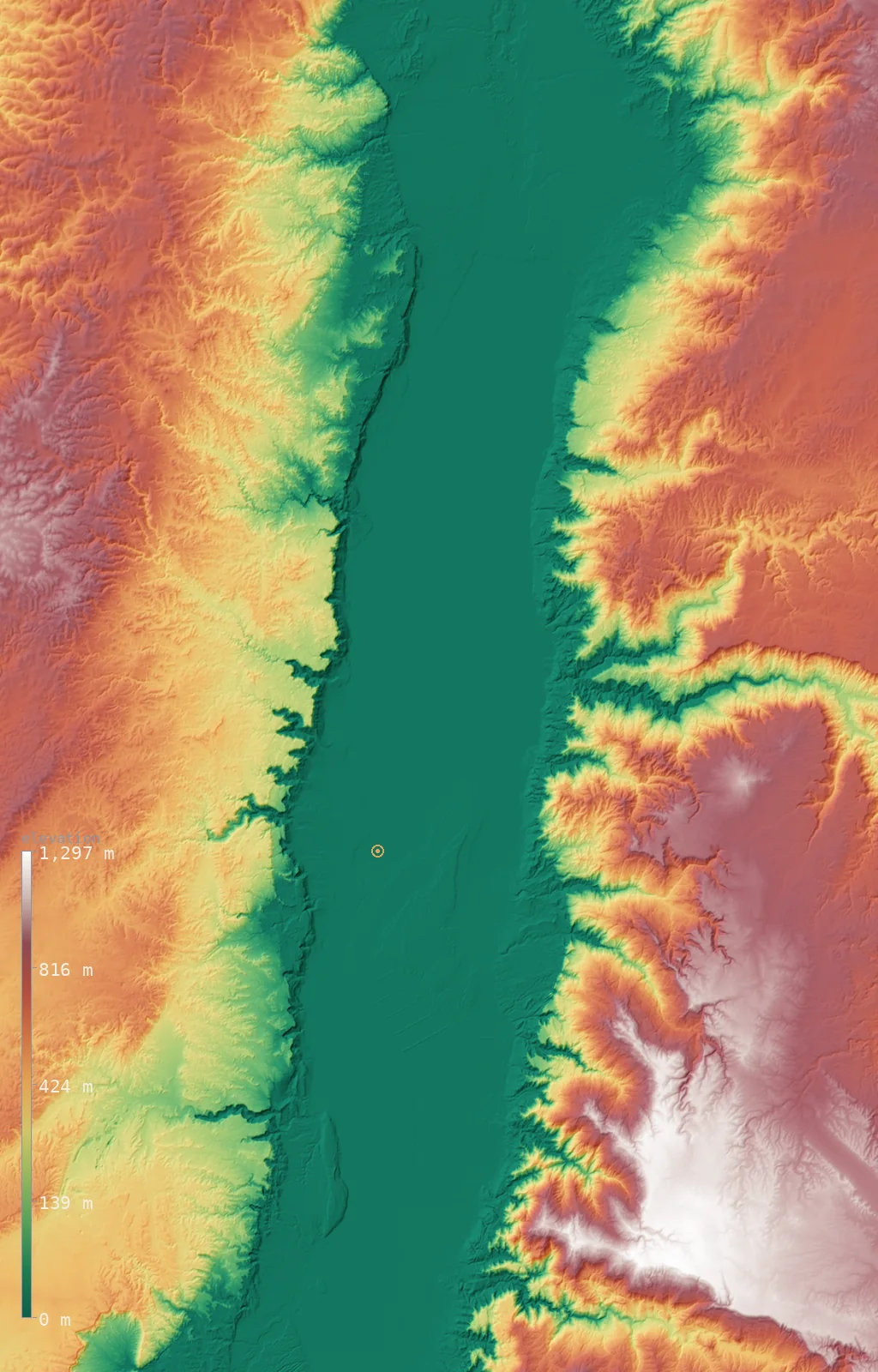
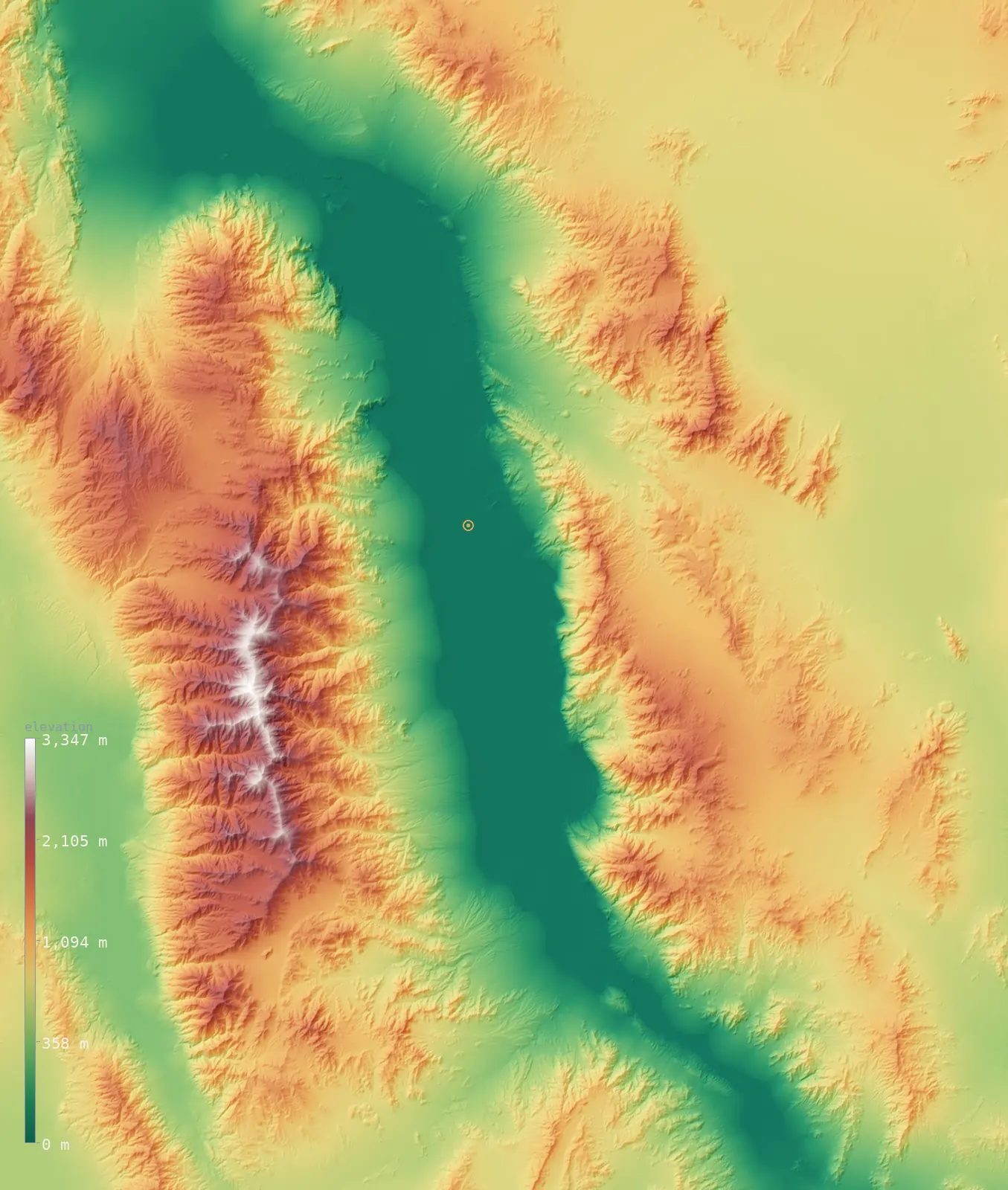
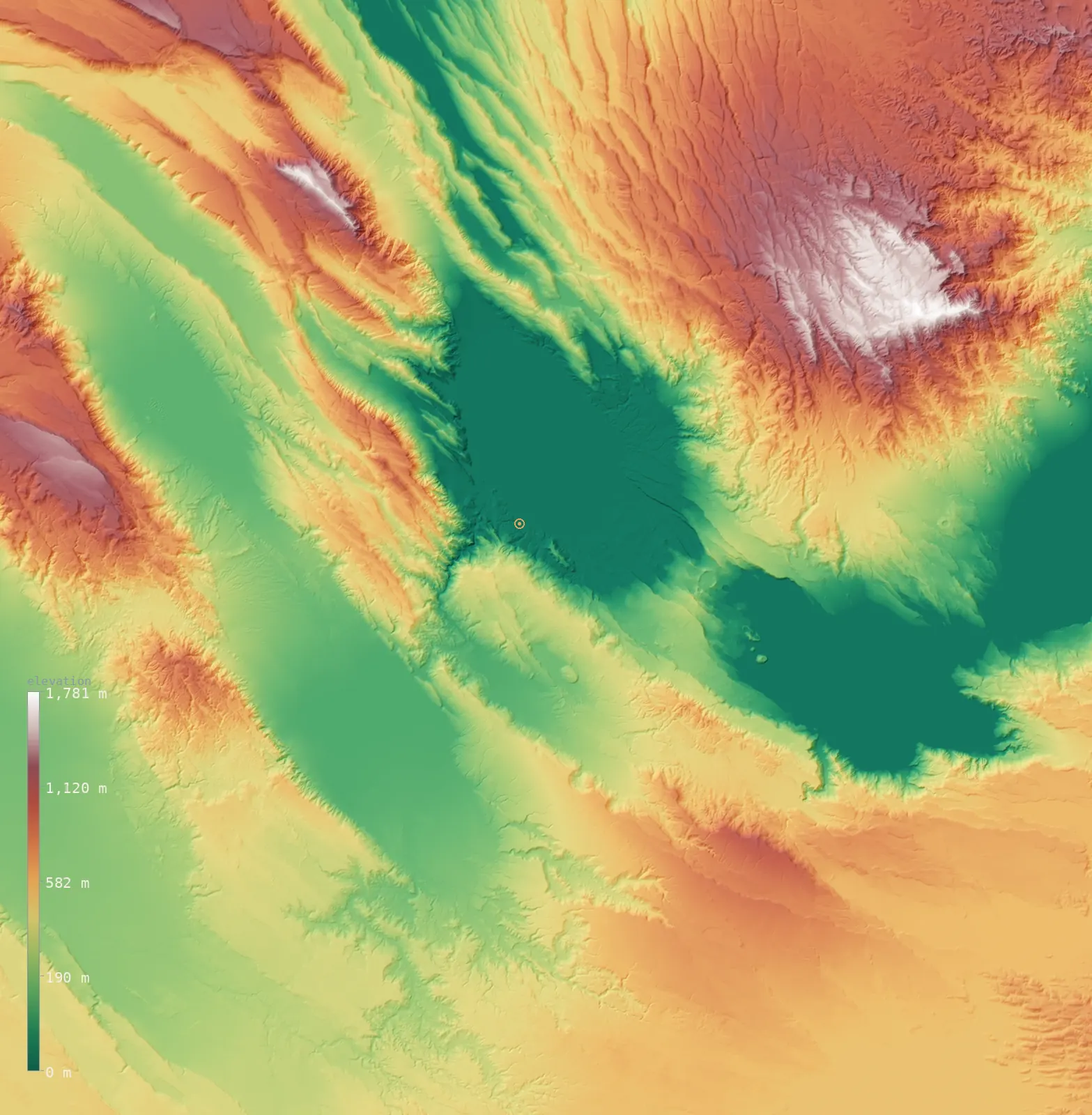
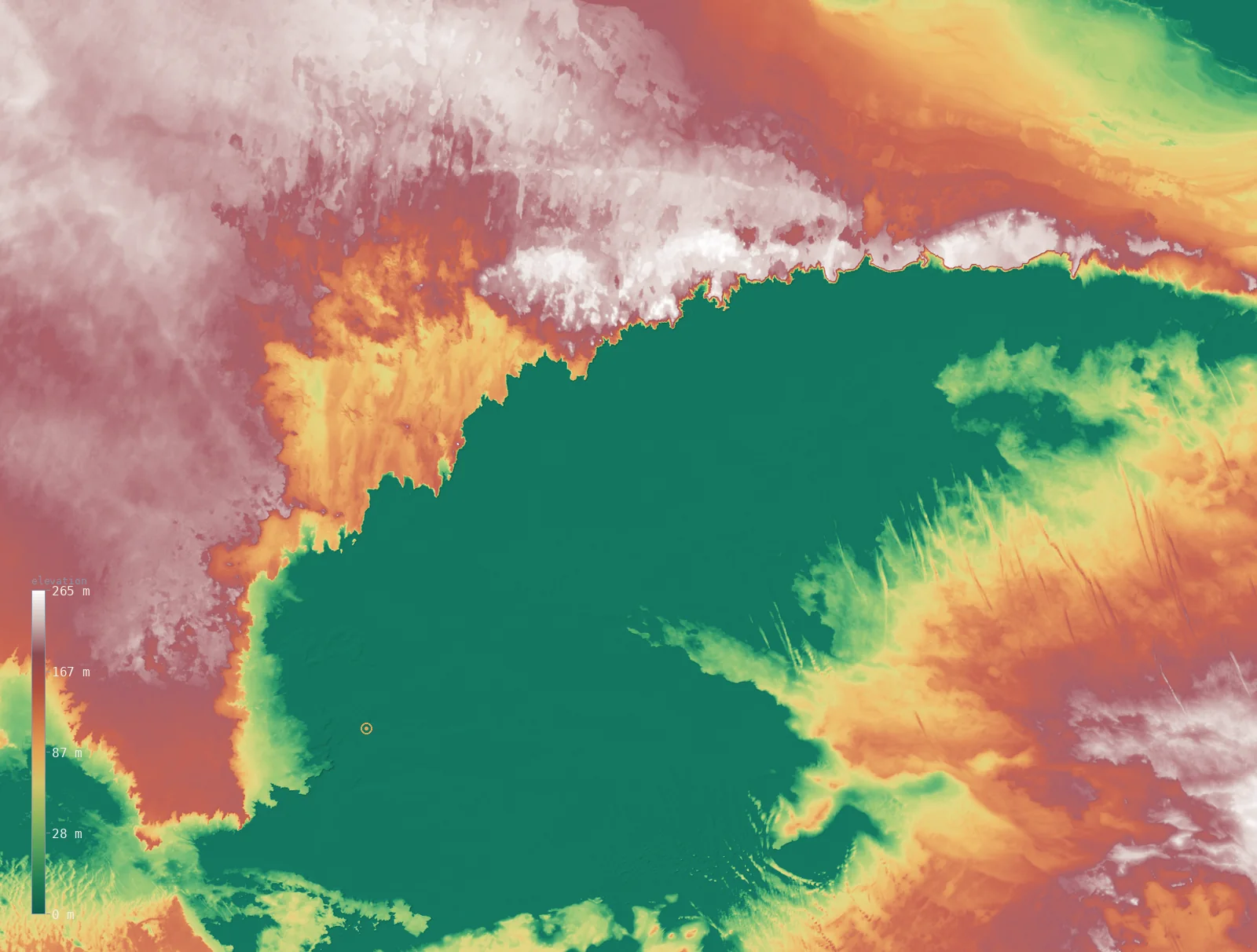
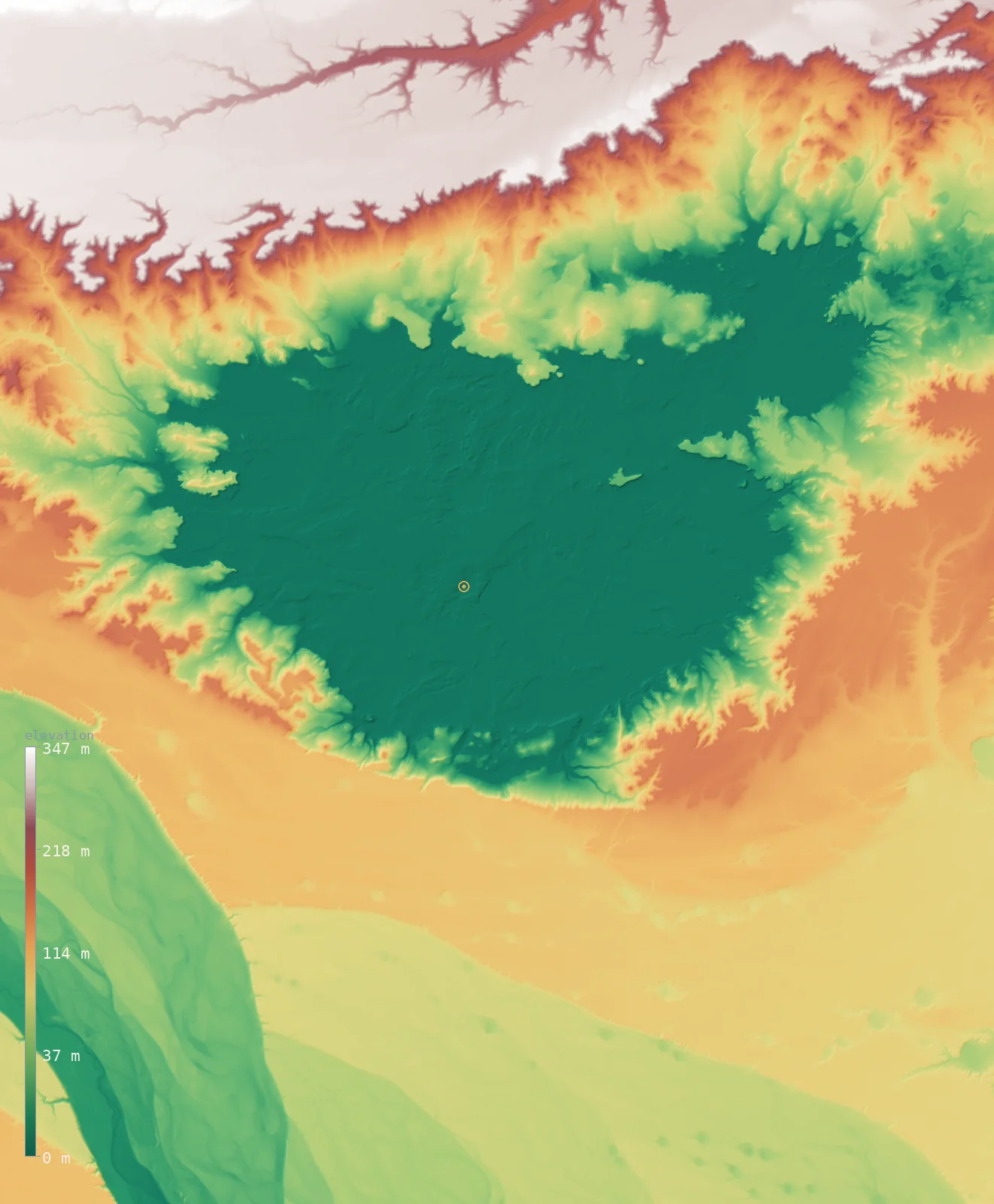
Every below-sea point that falls inside a country also shows on that country’s own map — the same sub-zero terrain in national context. Start with Israel or browse the full country index.
Frequently asked questions
- What is the lowest point on Earth?
- Challenger Deep, at the bottom of the Mariana Trench, about −35,876 ft (−10,935 m) below sea level — the lowest point on the planet’s solid surface, if you count the ocean floor.
- Is the lowest point the Dead Sea or the Mariana Trench?
- Both, for different questions. The Mariana Trench (Challenger Deep) is the lowest point overall; the Dead Sea shore is the lowest point on dry land — the deepest place you can stand in the open air.
- How deep is the Mariana Trench?
- Its deepest point, Challenger Deep, is about −35,876 ft (−10,935 m) below sea level by the 2021 survey — the figure has been refined from earlier soundings near −36,070 ft (−10,994 m).
- What is the lowest point on dry land?
- The shore of the Dead Sea, about −1,443 ft (−440 m) below sea level as of 2025, and dropping roughly a metre a year. The next-lowest are Lake Assal in Djibouti (−509 ft (−155 m)) and Ayding Lake in China (−505 ft (−154 m)).
- Is the lowest point deeper than Everest is tall?
- Yes. Challenger Deep (−35,876 ft (−10,935 m) below sea level) is about 6,844 ft (2,086 m) deeper than Everest (29,032 ft (8,849 m)) is high — Everest would vanish under the trench with room to spare.
- Has anyone been to the bottom?
- Yes, but rarely. Jacques Piccard and Don Walsh first descended in 1960 aboard the bathyscaphe Trieste; only a small number of people have reached it since.
Sources
Challenger Deep’s depth (−35,876 ft (−10,935 m), 2021 survey) and its history are from NOAA and Britannica; the ocean floor is not in our elevation model, so those figures are external. The Dead Sea shore is quoted at its 2025 surface level, about −1,443 ft (−440 m) below sea level and falling ~1.1 m a year (our country dossiers and the DEM carry the mid-2010s level, ~430 m; the difference is a decade of drawdown). The other land depressions are the lowest points in our own dossiers and the DEM — the same data behind countries below sea level. Everest’s 29,032 ft (8,849 m), used for the comparison, is our Nepal high-point figure. How this site measures elevation is on the methodology page; built by Marko Visic.
Related
- · The highest mountain in the world — the opposite extreme, Everest, and how it was measured.
- · Countries below sea level — the full ranking of land below 0 m.
- · Elevation vs altitude — below sea level is negative elevation.
- · More elevation deep-dives — the blog.
Challenger Deep depth from NOAA and Britannica (external — the seabed is not in our model); Dead Sea and land-depression lows from our dossiers (Copernicus GLO-30, ESA); Everest from our Nepal data. Built by Marko Visic.